
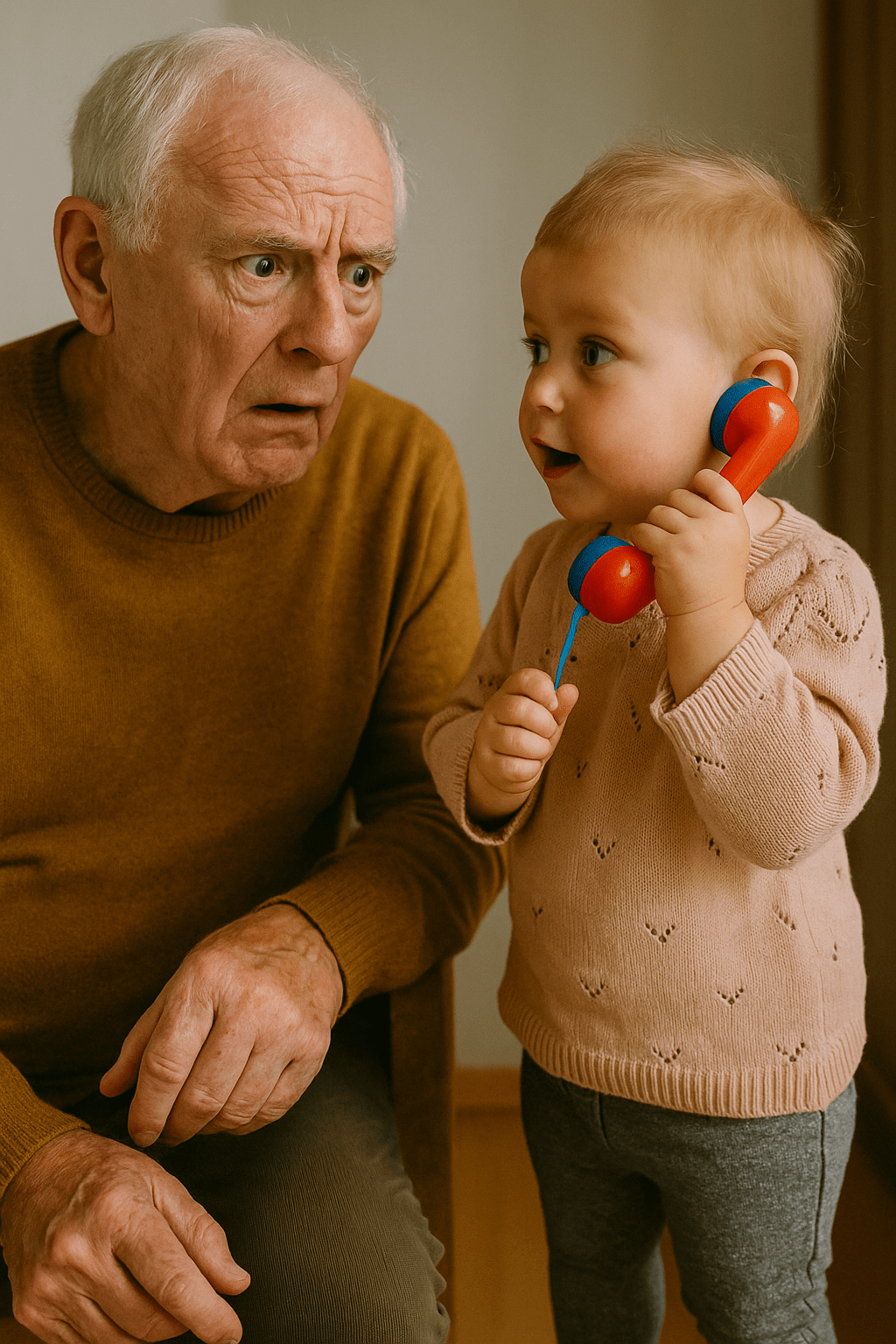
You know what’s really confusing? Why some adults experience a mild panic when a toddler says something like, “Mummy, can I have an Apfel?” – as if the sentence will somehow break their brain!
Parents often worry that their bilingual or multilingual child mixing languages in a sentence means they’re doomed to a life of linguistic chaos. They say things like, “She said the German word but used the English sentence structure – is she confused?”
Take my own daughter, for example. She’ll casually announce, “Ich will teeth cleanen,” or “I go mit on holiday.” Is she confused? Absolutely not. She’s a genius! She’s combining tools from both toolboxes to build the clearest sentence she can – and getting exactly what she wants from me (except, perhaps, the extra holiday!).
Here’s what’s actually happening: your child’s brain is incredible. Much cleverer than most adults give it credit for. If a child has a need, let’s say they’re thirsty, then their little brains scans its language resources for the easiest, quickest way it can find to get that point across. Sometimes, the fastest route is a mix: one word from language A, a couple from language B, and so on. This is especially when they’re still learning to speak.
And yes, sometimes family members and other people around us, especially those who aren’t bilingual themselves, find this difficult to follow. My daughter speaks very clearly for her age, for example, but still, her nanny and “Grangank” still don’t always understand what she’s saying because their German is… well, not even at toddler level!
And honestly, who can blame them? Most adults around your child probably didn’t grow up bilingual. They may not understand what’s happening in your child’s brain, or why it’s not “wrong” to mix words across languages. They’re not confused because your child is unclear. They’re confused because this kind of language use doesn’t fit the neat little rules they were taught in school.
That’s where support comes in. A bilingual parenting coach (hi, that’s me) can help you navigate those awkward family conversations, explain the brain science in plain language, and give you the confidence to respond with more than just a polite smile when someone says, “Shouldn’t she speak properly by now?”
So what does my Little Bean do when nanny is visiting? She adapts. If “Apfel” doesn’t work, she’ll try “apple”. If “frisch machen” gets a blank look, she might go with “frisch nappy”. Not because she’s consciously switching to “Nanny’s language”, but because her brain is rifling through the drawer of available words and tossing out the next best one until something sticks.
This isn’t confusion; it’s efficiency.
As bilingual children’s language skills develop (usually around age four), they start to separate languages more consistently. Not because someone made them, or clarified their “confusion”, but because their brain can now grasp the concept of separate langauge systems. And yes, they might still pepper one language into the other here and there, but then it’s conscious. Purposeful. Just like we do. (We all have that one German friend who says things like “I hab einfach kein Bock today,” and honestly – same.)
Still not convinced?
Think of it like this: your child is basically speaking in code – and only the cool people are in on it. If Aunty Joan is confused, maybe she’s just not in the club!
Language mixing isn’t a bug that causes confusion. It’s a feature of bilingual learning. A sign your child is developing language very efficiently, and on their own terms.
📧 You’re welcome to join The MAASter Plan newsletter to get expert tips, heartfelt stories, and subscriber‑only practical resources delivered straight to your inbox!
Prefer human-to-human? I offer free 15‑minute intro chats and paid support sessions tailored to your family’s needs.

 The Maaster Plan
Leave a comment