
Wondering how to get started with bilingual parenting without feeling overwhelmed?
I remember that feeling, too. The good intentions. The language goals. The baby who would rather grab the book than listen to it.
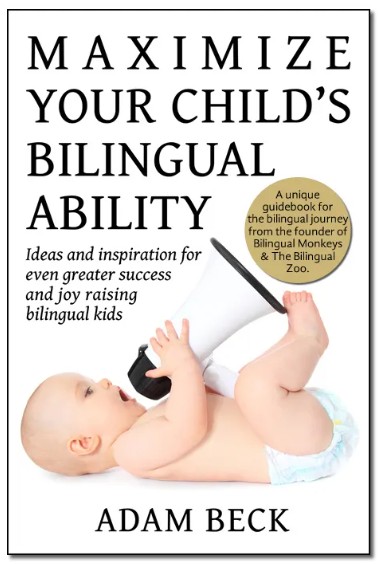
If you’re keen to raise a bilingual child but unsure where to begin, Adam Beck’s book Maximize Your Child’s Bilingual Ability is a gem. It is packed with real, practical advice for families. And as someone who teaches languages for a living and is raising a bilingual little one myself, I can wholeheartedly say: this stuff works.
Here are some of my favourite takeaways from the book, with a few personal reflections along the way.
1. Prioritise Exposure: Make the Language Part of Daily Life
Bilingual children do not just absorb a second language by accident. They need plenty of consistent, high-quality input. Adam suggests aiming for around 25 hours a week. That might sound like a lot, but with a little creativity, it is more doable than you think.
Here are some practical ways to build it in:
🗣 Talk about everything – narrate your routines, describe what you are doing, talk to the teddy bears, sing while changing nappies. Even the mundane stuff counts.
📚 Mix it up – books, songs, stories, audiobooks, and games all help.
📆 Stick to a routine – daily habits make it easier to stay consistent, even when life gets chaotic.
It is not about perfection. It is about showing up regularly with the target language.
2. Read, Read, Read – And Then Read Some More
Reading is a bilingual parent’s superpower. It builds vocabulary, grammar, imagination and emotional connection all at once. And even if your child can read on their own, there is real value in continuing to read aloud together.
Adam’s tips (and mine):
📖 Start early and make it a habit. A book at breakfast, a story at bedtime, whatever fits.
🎧 Can’t always be there? Record yourself reading favourite stories or ask loved ones to help.
📚 Offer variety. Not just picture books but also magazines, poems, comics, and factual texts.
🏡 Create a print-rich environment. Bookshelves in sight, posters on walls, a library card ready to go.
💬 Chat about what you are reading. Ask questions, wonder aloud, compare to your own life. It is the conversations around books that really make them powerful.
3. Make It Fun and Light-Hearted
Children do not learn well when they feel pressured. I mean, who does? The more fun and connection you bring into using the language, the more likely it is to stick.
Here is what works for us:
🎶 Silly songs, rhymes and jokes – bonus points if they make you both giggle.
🎲 Play games – I Spy, memory cards, scavenger hunts, or just making up silly sentences.
👏 Celebrate little wins – new words, funny mispronunciations, or when they start mixing less. Your enthusiasm is contagious.
Your attitude towards the language shapes theirs more than you might realise.
4. Create a Real Need for the Language
This one is so important and often overlooked. If your child can always switch to the other language and still be understood, it is easy for them to take the path of least resistance. Creating genuine reasons to use the minority language helps keep it active.
Here are some easy ideas:
⏰ Set language moments – maybe breakfast is always in the target language, or Sundays are screen-free and language-focused.
🌍 Immersive experiences – visit places where the language is spoken, attend local events, or connect with other families.
📞 Monolingual relatives or friends – regular chats with someone who only speaks the target language can give a real boost. Bonus if it is someone they adore and want to talk to, like nanny and grandad!
5. Media, Challenges and Other Fun Bits
I know we don’t want out children staring at screens for too long, but there can be ways to use them to boost language development. The trick is to make them work for your bilingual goals.
📺 Choose shows or audiobooks in the target language that your child actually enjoys.
📝 Try mini challenges like writing a note to grandma or labelling things around the house.
📚 Use activity books, comics, or interactive language apps if screen time is on the table. Just keep it age-appropriate and fun.
The more natural it feels, the more it becomes part of your child’s world.
Final Thoughts
As a language teacher, I can tell you these strategies are backed by research. As a mum, I can tell you they are also backed by crumbs on the floor, interrupted sentences, and the occasional “What language was that supposed to be?”
It is not always easy. But it is absolutely possible! You can see my other posts on the topic, as a case in point!
Bilingual parenting does not have to be perfect. It just has to be intentional, flexible, and kind – to yourself and to your child.
What about you?
Have you tried any of these strategies? Got your own tips to share? Pop them in the comments – I would love to hear what is working or what you are struggling with. Here are some more practical tips of mine!
And if you have not yet, subscribe to the blog for updates, free resources and practical support. You can also check out Adam Beck’s Raising Bilingual Monkeys: it is a fantastic community and resource. And you can find him on Instagram and YouTube.
Need a bit more personalised support?
Every family’s bilingual journey is different, and sometimes it helps to talk it through with someone who understands what you are trying to do. Alongside raising my own multilingual child, I support parents through coaching and practical guidance. No guilt. No unrealistic goals. Just clear, realistic strategies that suit your family.
If you would like help creating a bilingual plan that fits your daily life, take a look at my bilingual parenting support sessions, or book a free 15-minute intro call.
Let’s grow your child’s languages together – with clarity, confidence and connection.

 The Maaster Plan
Leave a reply to How to Read to Your Toddler to Boost Their Language Development – The Maaster Plan Cancel reply