

When you pack up your life to move abroad, or when one partner moves to join the other, you expect adventure, challenges, and plenty of new experiences. That’s what people share on social media. What many international parents don’t expect, though, is how quickly language becomes the heart of family lif, and how it really looks when you’re bringing up bilingual children abroad.
I know this personally. I was a 40-year-old first-time mum, far from my family, completely overwhelmed. Writing became a way to process what I was experiencing, and to reach others who might be feeling the same silent chaos. What started as my own survival mechanism grew into my mission: helping other parents guide their children through the beauty and messiness of multilingual family life.
Because it’s not just about raising a “mini polyglot.” It’s about raising a whole human, with open eyes and an open heart.
What “language identity” really means
Language identity isn’t just about words. It’s about belonging.
For a child in a multilingual, multicultural family, it means knowing: “I am part of all these worlds, and all of these languages are mine.”
We can think of language as the bridge between our child and the people who love them. If that bridge feels strong, they’ll walk across it easily, feeling at home with grandparents, cousins, and cultural traditions. If it feels weak or broken, children may shy away, feeling like outsiders in part of their own family.
That’s why supporting language identity is about more than vocabulary. It’s about helping children feel safe, proud, and connected in every language that makes up their story.
Why it matters so much for expat families
Take my friends Beca and Stefan. Beca grew up speaking French, Stefan German. They now live in Brussels, raising two little girls. At home, Stefan speaks German, and the girls sometimes roll their eyes: “Papa, just speak French, it’s easier!” Stefan laughs it off, but deep down he worries: if his daughters stop speaking German, how will they connect with his parents back in Trier?
This is the heart of the challenge: in expat families, language is more than communication. It’s how children belong, to their parents, to their extended family, to their cultures. Without that sense of belonging, kids may grow up feeling torn between worlds instead of proud to live in all of them.
I often remind parents: your children don’t need you to be perfect. They need you to be present. To show them, in small daily rituals, that every language and every piece of their identity matters. And keep on speaking your language!
The Third Culture Kid experience
Many children in expat families grow up as what researchers call Third Culture Kids (TCKs).
The first culture is the heritage of one parent.
The second culture is the heritage of the other parent.
The third culture is the environment they’re actually growing up in, often different from both parents’ backgrounds.
For some families, this means one parent is local and the other is expat. For others, it means both parents are living outside their home countries, raising children in a completely new cultural and linguistic setting. In both cases, children are piecing together an identity that blends multiple cultures and languages. This can be a rich and rewarding experience, but it can also be confusing, especially if one language or culture feels “weaker” than the others.
Language becomes the key anchor. It’s the most immediate way children express and experience who they are. If they lose one language, they may feel like they’re losing a part of themselves. That’s why it’s important to maintain good habits. Because if all family languages are nurtured, children can grow into confident multilinguals who see their mixed identity as a superpower, not a burden.

What this looked like in my own family
For me, it really hit home when my daughter started using English words in German sentence structures. One day she said, “Ich will teeth cleanen.” The syntax, the verb position — it was all perfectly German, just with a sprinkling of English words.
That’s when I realised the German was taking over, and I’d need to step up my game to keep English strong at home. It’s a normal shift, but for me it was a wake-up call.
She’s now two, and this morning she said, “Ich weiss nicht, wo mein Haargummi ist.” That’s an indirect question, perfectly structured, and I had to message her dad to say wow, look how ewll she speaks! Even if it’s in German (boo!), that’s amazing linguistic processing for a two-year-old.
The challenges you might recognize
If you’re in a multilingual expat family, you may have noticed some of these patterns:
- Your child prefers the dominant community language, even at home.
- The expat parent feels their language is slowly being “pushed out.”
- Relatives abroad feel hurt or excluded when your child struggles to talk with them.
- You and your partner disagree on how much effort should go into the “minority” language.
- Your child code-switches constantly (mixing languages mid-sentence) — and you wonder if that’s a bad sign.
All of these are normal. But they can feel heavy when you’re trying to do the “right thing.” I know, because I’ve felt that same weight.
The emotional weight of language resistance
When a child resists speaking your language, it can sting. You think of the grandparents they won’t be able to connect with, the cultural experiences they’ll miss. You try to explain why it matters, and they shrug or whine or just walk away.
But here’s the thing: telling them why your language is important won’t work. They have to feel it. Your job isn’t to convince, but to connect. Emotional connection is what is going to get them using the language. Bring in joy, humour, stories, warmth — anything that makes your language feel like home.
Don’t waste energy on guilt. Language loss can happen gradually, quietly. You’re not a failure. You’re doing your best in a tricky setup. Focus on what you can do: keep the connections strong, the input flowing, and the door open.
What the science says
One thing that reassures me is the psychology of language acquisition. I’ve studied linguistics, taught English as a foreign language, and trained future language teachers, and what I’ve learned is this: the brain is incredible.
Even when life gets hectic, even when you switch on an audiobook because reading aloud makes you carsick, your child’s brain is soaking it all in. Even if the community language has been dominating for a while, you haven’t ruined their bilingualism. Language acquisition is resilient. It finds a way.
What really works: engagement
From my teaching background, I know what makes language learning stick, and one of the biggest factors is engagement.
That’s what I focus on with my daughter and with the families I support. Whether it’s bedtime stories, songs, jokes, or cultural traditions, kids need to want to engage. They need to feel the language is theirs, not something imposed.
It’s about turning exposure into interaction, turning input into connection.
5 things that help build a strong language identity
Here’s what I’ve learned, both personally and professionally:
1. Make a family language plan that works for you
Don’t copy someone else’s setup. Your family constellation is unique. What matters is agreeing on a strategy and sticking with it. It might be OPOL, ML@H, or something more fluid. As long as it’s consistent, it can work.
2. Make the language emotionally meaningful
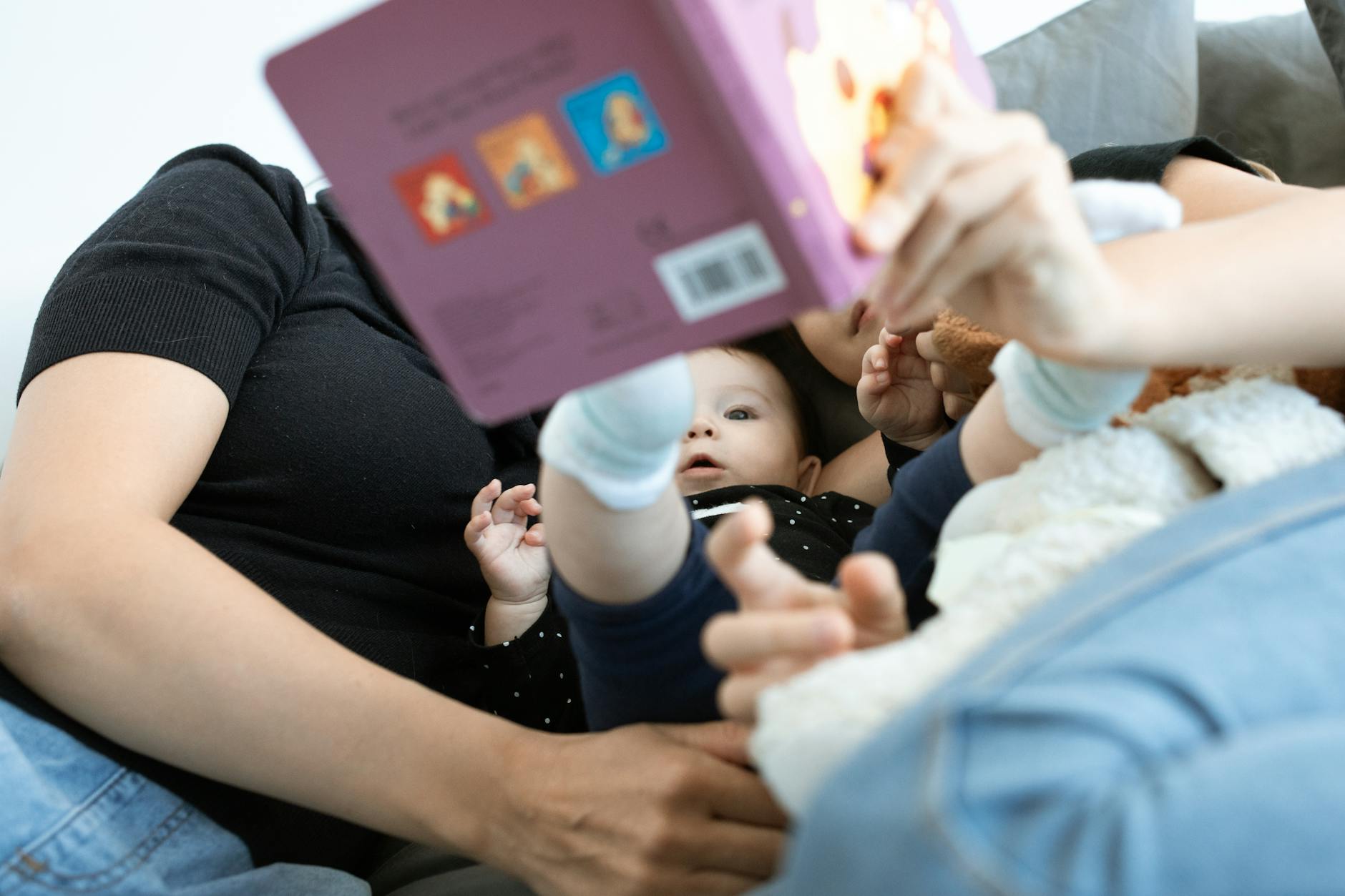
Don’t just “use” the language. Make memories with it. Snuggle and read. Cook and chat. Celebrate with songs and stories. Wrap the language in love and cultural meaning.
3. Keep long-distance connections alive
Even if visits are rare, calls, messages, and photos matter. Rituals like Saturday calls with Grandma in her language build lasting bonds. If you can, travel to the home country and get enthusiastic about the culture with your kids.
4. Show unity as parents
Kids notice when parents aren’t on the same page. Even if one parent isn’t fluent in the other’s language, showing curiosity and support makes a difference.
5. Let go of fear around code-switching
Mixing languages isn’t a failure. It’s a sign of flexibility. Eventually, children learn to separate languages by context. For now, celebrate their creativity.
Tools & resources
- Children’s books in both family languages (bilingual editions can help).
- Audiobooks & music apps (Spotify, Audible, Storynory) for immersion.
- Cartoons or movies in the minority language — fun counts as practice too.
- Language playgroups or expat networks where kids hear peers speaking the same language.
- Tradition boxes: create a “culture box” with photos, songs, recipes, and stories from the expat parent’s home country.
FAQs for mixed-language families
“Our child refuses to speak the expat parent’s language, what should we do?”
Don’t panic. Keep speaking it consistently, and don’t switch to the dominant language out of frustration. Understanding often comes first; speaking follows.
“Will my child be confused if we use multiple languages at home?”
No. Research shows children can manage multiple languages, they simply need enough exposure and emotional support.
“Should we prioritize one language at home to make things easier?”
Not necessarily. If you stay consistent and positive, your child can thrive in both.
“How can we involve grandparents who live far away?”
Set regular rituals, like weekly calls, storytime recordings, or shared activities (grandma reading a bedtime story over video call).
Final thoughts
You don’t have to raise your child in two languages perfectly. You just have to keep going. With love, with intention, and with a willingness to let the messy moments be part of the story.
Your child doesn’t need a language teacher. They need you. To sing silly songs. To cuddle up for stories. To read them enjoyably. To show them that your language matters, because they matter to you.
Language identity isn’t built in a day. It’s built in a hundred tiny moments of connection. So go easy on yourself and trust that it’s adding up.
Because in the end, what your child will remember isn’t whether you always used the “right” strategy. It’s how it felt to grow up between languages, and how it felt to be loved in every one of them. And that is worth every effort!
Want more calm and confidence in your multilingual family life?
Pop your name on my email list so I can keep in touch – I’ll send you practical tips, encouragement, and relatable stories. I’m writing for you, for international families raising bilingual kids!

 The Maaster Plan
Leave a reply to 25 Common Myths About Raising Multilingual Kids – and What Actually Matters – The Maaster Plan Cancel reply